SDG Performance, Commitment and Leadership in Europe
Part 1
The Europe Sustainable Development Report (ESDR) is an annual assessment of progress made by European countries on the SDGs. It builds on SDSN’s global SDG Index methodology. This year marks the seventh edition of the ESDR, prepared by SDSN’s SDG Transformation Center in cooperation with SDSN Europe and the European Economic and Social Committee (EESC). The ESDR focuses both on Europe’s international leadership and internal priorities for achieving the SDGs.
1.1. Europe, the SDGs and leadership in a changing world order
1.1.1. Europe’s historical track record on sustainable development
Europe has long been a leader in promoting sustainable development and UN-based multilateralism. As early as 1971, the Club of Rome commissioned the groundbreaking study that led to the publication of Limits to Growth in 1972, ahead of the first UN Conference on the Human Environment, held in Stockholm. The European Union embedded sustainability into its policy framework well before the SDGs, starting with the 1997 Treaty of Amsterdam, which committed it to balanced and sustainable development. The EU launched its first Sustainable Development Strategy in 2001, introduced the world’s first major carbon market in 2005 (the EU Emissions Trading System), and enshrined sustainable development as a core paradigm in the 2007 Treaty of Lisbon.
Europe naturally took the lead in championing the SDGs leading up to 2015 and moved quickly to establish implementation frameworks following their adoption. The 2017 Joint statement by the European Commission, Parliament and Council, entitled European Consensus on Development, positioned the SDGs as the core guide for EU policies. That same year, the EU launched a multi-stakeholder SDG platform and Eurostat’s first SDG monitoring report, which tracked 102 EU relevant SDG indicators. Various EU agencies were also mobilized to support SDG implementation. In 2019, via the European Green Deal, the EU became the first continent to adopt a clear commitment to achieving net-zero emissions by mid-century. In the aftermath of the COVID-19 pandemic, the Recovery and Resilience Facility and NextGenerationEU were oriented toward a green and digital recovery (Lafortune et al., 2021). And in 2023, Europe became the first continent to present a blocwide voluntary national review (VNR) at the United Nations, with the EESC mandated to organize structured engagement with civil society in Europe (EESC, 2023).
From a global perspective, European countries remain the world’s leaders in sustainable development and well-being in 2026, and the European model remains an inspiration for many parts of the world. Of the top 20 positions on the global SDG Index, only one is held by a non-European country (Sachs et al., 2025). Europe has reached unprecedented levels of well-being and prosperity – higher than any other region in the world (Helliwell et al., 2025). It benefits from a large internal market of around 450 million inhabitants, a very healthy and well-educated population, advanced social protection systems, and accessible and effective infrastructure, including transport and digital networks.
At the same time, Europe faces significant and interrelated challenges, including geopolitical, financial, economic, demographic, environmental and social pressures. As underscored in the 2024 Draghi and Letta reports, Europe must take decisive action to safeguard its socio-economic model and remain competitive in key 21st-century technologies. The Eurozone’s economy is projected to grow by just over 1% between 2025 and 2027, below the average of other advanced economies, including Canada and the United States. In principle, Europe’s large stock of savings represents a major opportunity to invest in infrastructure and in green and digital technologies. In practice, however, persistent fragmentation in Europe’s capital market means that a large share of these savings is invested abroad, including in the United States. These dynamics call for a united, visionary and action-oriented European leadership to resolve on-going crises, accelerate investment in the green and digital technologies of the future, and forge new partnerships in a changing international order. As emphasized recently at Davos by Prime Minister of Canada, Mark Carney: ‘It seems that every day we’re reminded that we live in an era of great power rivalry, that the rules-based order is fading, that the strong can do what they can, and the weak must suffer what they must. […] In a world of great power rivalry, the countries in between have a choice – to compete with each other for favour, or to combine to create a third path with impact.‘ (WEF, 2026)
1.1.2. The SDGs and the second von der Leyen Commission (2024–2029)
The war in Ukraine and the explicit opposition of the United States since 2025 to the SDGs and UN-based multilateralism represent significant challenges for Europe’s commitment to sustainable development. The European Green Deal and associated regulatory frameworks, particularly those concerning corporate sustainability reporting or sustainable agri-food systems, are being progressively diluted – in part due to shifting political priorities and narratives focusing on simplification, strategic autonomy and competitiveness (Matthews, 2024; Sadeleer, 2025; Gros and Griera, 2025; Tocci, 2025; European Central Bank, 2025). Policy attention and investments are shifting away from sustainable investments and global cooperation – including official development assistance (ODA) – coinciding with an increase in spending on defence and security. Diplomacy remains, in principle, a very cost-effective strategy.
Since the Second World War, the United States has been Europe’s closest international ally from a military and economic perspective. Yet Europe's principal ally now explicitly opposes the SDGs and UN-based multilateralism (Lafortune and Sachs, 2025). It opposes the use of terms such as ‘sustainable development’, ‘climate’ and ‘gender’. The United States is increasingly policing the terminology used in international organizations and meetings, including G20 declarations (Eligon, 2025) and the framing of the 2026 World Economic Forum in Davos (Ruehl et al., 2025; Gelles, 2026). The United States withdrew from the negotiations at the Summit on Financing for Sustainable Development in Seville, Spain in June 2025, and from 66 United Nations organizations in January 2026.
Coincidentally, Europe has adjusted its policy focus and rhetoric, a shift most evident since the start of the second von der Leyen Commission (2024–2029), the political guidelines of which make no reference to the SDGs or Agenda2030. A careful review of the annual European Commission work programmes over the2016–2026 period reveals that by 2025 and 2026 the European Commission no longer refers to the SDGs or the 2030 Agenda at all (Figure 1.1). Using the JRC SDG Mapper, a detailed analysis of European Commission President von derLeyen’s 2025 State of the Union Address shows a marked decline in references to the SDGs overall, particularly to social and environmental goals. References to these goals have fallen to levels lower than those observed during the Juncker Commission, and are significantly reduced compared to the first von der Leyen Commission. There is an extensive literature showing how shifts in language, terminology and framing can influence actions both at the individual and collective level (Kangas et al., 2014; Markard et al., 2021; van Hulst et al., 2025; Flusberg et al., 2024). As described above, there is already evidence that the European Green Deal is being diluted.
Figure 1.1 | Explicit references to the SDGs in the annual work programme of the European Commission, 2016–2026 (number of occurrences)

Note: Tracks explicit reference to ‘SDG‘, ‘Sustainable Development Goal‘ and ‘2030 Agenda‘.
Source: Author, based on SDG JRC mapper (Borchardt et al., 2023).
1.1.3. Beyond the European Commission’s leadership: SDG momentum remains strong
Not all EU institutions have moved away from referencing the SDGs and the 2030 Agenda, however. The European Parliament issued its third SDG resolution in July 2025 (European Parliament, 2025), while the Council of the European Union referred explicitly to the SDGs in its Strategic Agenda 2024–2029 and maintained its Council Working Party on the 2030 Agenda. The EESC adopted a groundbreaking opinion in July 2025 on the interdependence between climate and peace, making multiple references to SDGs and notably to the concept pioneered by the SDSN of using Green Deal/ SDG diplomacy to forge new alliances in Latin America, Asia, Africa and the Global South more broadly (EESC 2025a). All European countries have presented their action plans on sustainable development at least once via the Voluntary National Review (VNR) process, and six European countries covered in this report volunteered to present an updated VNR in 2026 (Figure 1.2). Increasingly, cities and regions across Europe are also developing and presenting action plans on sustainable development via ‘Voluntary Local Reviews’ (VLRs), notably in Germany, Finland and Spain (Figure 1.2).
Figure 1.2 | Number of Voluntary Local Reviews prepared by regional and/or local authorities, all countries 2016–2025 (European countries in light blue)

Note: As of 1 April 2025.
Source: Authors’ elaboration based on data from UN Department of Economic and Social Affairs (DESA). https://sdgs.un.org/topics/voluntary-local-reviews
Internationally, while less than 20% of the SDG targets are on track to be achieved by 2030, the SDGs still benefit from a very broad consensus. At the Summit for the Future in 2024, all countries recommitted to achieving the SDGs, and only three of the 193 UN Member States have not yet taken part in the VNR process (Haiti, Myanmar and the United States). Vietnam introduced a government resolution in January 2026 to rank in the top 50 countries in the SDG Index (Van Nguyen, 2026). Despite U.S. opposition, the international community reached ambitious agreements on financing for sustainable development in 2025 – unanimously adopting the Seville Commitment following the 4th International Conference on Financing for Development and agreeing on international levies on the shipping industry via the Net-Zero Framework of the International Maritime Organization (IMO).
Civil society worldwide also remains strongly mobilized around the paradigm of sustainable development. The SDSN has become the largest network of scientists and practitioners mobilized to identify solutions for sustainable development, and its national chapters and membership continue to grow globally. Through its SDG Transformation Center, the SDSN has deepened its cooperation with many countries, including those in Sub-Saharan Africa and Central Asia, to strengthen long-term monitoring, investment and policy frameworks for sustainable development.
Coalitions of countries are being formed to continue global cooperation for sustainable development. Priorities include the reform of the Global Financial Architecture and strengthening regulations for a sustainable trade system. These coalitions are likely to become key drivers of change in the coming years, particularly in the context of great power politics and the rejection of UN-based multilateralism by some powerful nation-states.
1.1.4. SDSN Index of support for UN-Based multilateralism (SDG 17): Calling out the gaps between rhetoric and reality
As recognized under SDG 17 (Partnerships for the Goals), technological, financial and diplomatic cooperation within the United Nations framework is critical to achieving the SDGs. SDG17 is one of the goals that will undergo in-depth review this year at HLPF2026. In a nuclear era, military escalation carries the risk of catastrophic global consequences. The Doomsday Clock of the Bulletin of Atomic Scientists measures each year how close humanity is to self-annihilation due to nuclear war, climate change, biological threats and disruptive technologies. In January 2026, the Clock was set at 85 seconds to midnight – the closest since its introduction in the aftermath of the Second World War (Mecklin, 2026). No country can single-handedly prevent pandemics or climate change from occurring and impacting the livelihoods of its citizens and by the same token, all countries stand to benefit from coordinating their policies on new technologies, including artificial intelligence, in order to maximize their benefits while minimizing associated risks.
The United Nations system remains at the centre of these efforts to coordinate action across its 193 Member States. At the same time, nation states are the main actors within the UN system that can decide to support or undermine UN-based multilateralism. Many countries and experts have called for reforming the UN system to make it more effective and inclusive and better aligned with current realities, including shifts in balance of powers and the emergence of long-term challenges like climate change. In his speech at Davos, in addition to making multiple references to the paradigm of sustainable development, Mark Carney also emphasized the following: ‘For decades, countries like Canada prospered under what we called the rules-based international order. […] We knew the story of the international rules-based order was partially false [… .] And we knew that international law applied with varying rigour depending on the identity of the accused or the victim. This fiction was useful, and American hegemony, in particular, helped provide public goods, open sea lanes, a stable financial system, collective security and support for frameworks for resolving disputes. So, we placed the sign in the window. We participated in the rituals, and we largely avoided calling out the gaps between rhetoric and reality.‘ (WEF, 2026)
SDSN has, for many years, sought to shed light on some of the gaps between rhetoric and reality via its Index of countries’ support for UN-based multilateralism (UN-MI). A detailed methodology of the UN-MI has been presented in a peer-reviewed paper (Lafortune and Sachs, 2024). SDSN incorporates this index in both the global and the European annual sustainable development reports as a metric under SDG 17 (Partnerships for the Goals), and it is now also used by UNDP in the Global Knowledge Index (UNDP and MBRF, 2025). The UN-MI is based on six narrowly defined headline indicators:
- Ratification of major UN treaties
- Percentage of votes aligned with the international majority at the UN General Assembly (UNGA)
- Participation in selected UN organizations and agencies
- Participation in conflicts and militarization
- Use of unilateral coercive measures
- Contribution to the UN budget and international solidarity
The poor performance of the United States (which has ranked last since the introduction of this Index in 2023) and of some of its allies suggests that the concepts of rules-based international order (repeatedly promoted by the U.S. federal government) and UN-based multilateralism are truly distinct – and arguably even opposite – frameworks. Table 1.1 presents the top 10 and bottom 10 countries in the 2025 UN-MI. The United States performs poorly on all six indicators (Sachs et al., 2025). In particular, no other country has used unilateral coercive measures as a pillar of hybrid warfare to destabilize financial systems, currencies and trade flows. The 2030 Agenda contains clear language calling on countries to refrain from using unilateral coercive measures.1 In January 2026, the United States withdrew from 66 United Nations organizations. It also withdrew from major international treaties including the Paris Climate Agreement. This stands in stark contrast to the role that United States played in 1944–45 in establishing the United Nations, and to the momentum towards global cooperation, the SDGs and climate action observed at the subnational level in U.S. states and municipalities. It also contrasts sharply with the renewed commitments of major countries such as Brazil and China, both of which presented ambitious Nationally Determined Contributions (NDCs) at COP30 in Brazil.
Table 1.1 | Index of countries’ support for UN-based multilateralism (UN-MI), top and bottom 10 countries, 2025

Source: Authors’ elaboration based on Sachs, Lafortune and Fuller, 2025
There is also the growing issue of delays in payment of member states’ assessed contributions. In January 2026, Secretary General António Guterres warned that the United Nations was at risk of ‘imminent financial collapse’ due to Member States not paying their financial dues. Each year, the SDSN monitors the payment of Member States’ assessed contributions, building on data compiled by the UN Fifth Committee on budgetary matters. This is one of the indicators included in the UN-MI. The SDSN tracks which countries pay on time, which pay with minor, or major, delays, and which are extremely late in fulfilling their financial obligations to the United Nations. According to this data, the United States is consistently among the countries with significant delays in paying its United Nations contributions, while most large European countries tend to meet their financial obligations either on time or with only minor delays.
Against the backdrop of the United Sates’ growing opposition to UN-based multilateralism – and its implicit, and since 2025 explicit, rejection of the SDGs – Europe faces an urgent need to reassess its alliances to achieve its strategic objectives in an increasingly multipolar 21st-century world. The paradigm of sustainable development is compatible in many ways with achieving Europe’s strategic aspirations, including ‘strategic autonomy‘. Reducing Europe’s dependence on fossil fuels via increased investments in renewable and other clean sources of energy contributes to Europe’s independence and security, as also emphasized by the EESC (2025b). Investments in adaptation and resilience, clean air, and environmental sustainability generate multiple co-benefits, including social and health related gains aligned with Europe’s focus on inclusive well-being, as emphasized in a recent EESC opinion (EESC, 2025b).
Figure 1.3 | Delays in payment of dues to the United Nations, G20 and large countries, 2020–2024

Note: A country receives a perfect score (100) for each year it appears on List I of the UNGA Committee on Contributions’ annual ‘honour roll’ of member states that have paid their regular budget assessments in full and on time. Countries on the honour roll’s List II – those whose regular budget assessments have been received in full, but after the 30-day due period – are given a score of 66 (‘small delay in payment’). Those absent from the annual honour roll receive a score of 33 (‘large delay in payment’). Countries still in arrears in the payment of their financial contributions under the terms of Article 19 by January of the subsequent year receive a score of 0. Final scores correspond to each country’s average across 2020–2024.
Source: Sachs et al, 2025.
At the same time, to quote Mark Carney, ‘A world of fortresses will be poorer, more fragile and less sustainable‘ (WEF, 2026). Europe’s aspiration to strategic autonomy should therefore build on a new wave of international partnerships and sustained efforts to promote a rules-based international order, including a fair and sustainable trade system.
Yet the transatlantic alliance has remained central to European leaders’ priorities and initiatives over the past two decades. From the turn of the 2010s through 2024, voting alignment between major European countries and the United States at UN General Assembly (UNGA) increased, even as substantial evidence pointed to the United States' steadily growing opposition to UN-based multilateralism since the mid-1990s. In 2025, however, this pattern shifts dramatically, marked by a sharp decline in voting convergence between major European countries and the United States at UNGA (Figure 1.4). Yet, at the EU level, in July 2025 in Scotland, the President of the European Commission – in addition to no longer referring explicitly to the SDGs – agreed to three additional arrangements and dependencies vis-à-vis the U.S. economy in the form of new tariffs, purchases of high cost U.S. liquefied natural gas, and increased purchase of U.S. military equipment (Taylor, 2025; Politico, 2025; Cook and AP, 2025). It is difficult to comprehend how these decisions advance the European Commission’s stated objective of achieving ‘strategic autonomy‘.
Figure 1.4 | Percentage of UNGA votes aligned with the United States, selected European countries (early members of the United Nations), 1950–2025 (average per decade)

Source: Authors
The U.S. threats directed at Greenland in January 2026 may mark a critical turning point for Europe. Since 2019, the SDSN and its partners have advanced the concept of SDG/Green Deal Diplomacy as a framework to deepen strategic partnerships with Africa, China, India, Latin America and other global actors. Recent developments underscore the relevance of this approach. Just days before his speech in Davos, Canada’s Prime Minister signed a historic strategic partnership with China, while in late January the EU and India concluded negotiations on their landmark India–EU Free Trade Agreement. In both cases, these agreements represent significant steps toward the diversification of economic and trade partnerships.
As the EU seeks to broaden its alliances and reinforce its global role, success will depend on articulating a coherent European voice and translating it into consistent international action.
For that purpose, it will be critical for Europe to demonstrate, in a coherent and consistent way, its support for UN-based multilateralism, notably via the systematic condemnation of violations of international law, including all wars of choice as well as all covert and overt regime-change operations prohibited under the UN Charter. The SDSN, including its Leadership Council, has made clear recommendations on how the UN system can be reformed to achieve sustainable development in a multipolar world (Sachs et al., 2024). Some of these recommendations could be taken up by Europe’s leadership. As the universal language for sustainable development, Europe should continue to uphold and explicitly reference the SDGs.
1.2. Performance of Europe on the SDGs
1.2.1. The 2026 SDG Index and Dashboards for Europe
The SDG Index for Europe covers 41 countries, including the 27 EU member states, 9 candidate countries, the 4 EFTA member states, and the United Kingdom. The methodology is transparent, and the global edition has been peer-reviewed by Nature Geoscience and Cambridge University Press, as well as being statistically audited in 2019 by the European Commission’s Joint Research Centre (Schmidt-Traub et al., 2017; Lafortune et al., 2018; Papadimitriou et al., 2019). Compared with other available reports and monitoring instruments, the ESDR places greater emphasis on incorporating data on international spillovers and combining official and non-official data sources – leveraging data from the academic community, NGOs and new technologies – to measure distance to and progress toward pre-defined thresholds (Lafortune et al., 2020). Compared with earlier editions, only limited adjustments to the indicators were made this year, primarily to align with the latest updates in indicator work across Europe, including on inclusive and sustainable well-being (Benczur et al., 2025).
From a global perspective, European countries remain the leaders in sustainable development. Of the top 20 positions on the global SDG Index, only one is occupied by a non-European country ( Japan, ranking 19th). However, there are still major SDG challenges in Europe on many dimensions of sustainable development, and SDG progress is uneven across European countries. The ESDR 2026 identifies these challenges and provides an in-depth analysis of the strengths and weaknesses of European countries. Due to missing data not all countries can be ranked in the Index. In total, this year’s SDG Index for Europe covers 35 countries with sufficient data availability to calculate an overall SDG score, including one additional country (Albania) compared with last year’s edition.
Table 1.2 | Europe Sustainable Development Report 2026, country coverage

Figure 1.5 | The 2026 SDG Index for Europe

Source: Authors
The 2026 edition of the SDG Index for Europe is topped by Finland, Sweden and Denmark. Historically, Nordic countries have consistently performed well on international assessments of SDG progress. Regionally, Northern Europe,the EFTA countries and Western Europe all have SDG scores above the EU average. A special SDG report for Nordic countries, released in January 2025, highlights progress made as well as shedding light on some specific challenges and emerging issues faced by Nordic countries in advancing sustainable development (Eriksson et al., 2025). By contrast, candidate countries show a sizable gap (of 11.4 percentage points) relative to the EU average, indicating a need to accelerate convergence in sustainable development outcomes.
The SDG Dashboards for Europe show that all European countries face at least two major challenges across the 17 goals – these are goals showing a red dashboard rating (Figure 1.6) European countries tend to face their greatest challenges in sustainable agriculture (SDG 2), sustainable consumption and production (SDG 12), climate action (SDG 13), and biodiversity protection (SDGs 14 and 15). On the other hand, the region tends to perform best on good health and well-being (SDG 3), eliminating poverty (SDG 1), and clean water and sanitation (SDG 6).
Figure 1.6 | The 2026 SDG Dashboards for Europe

Source: Authors’ calculations
Figure 1.7 | 2026 Leave-no-one-behind Index for Europe

Source: Authors
Box 1.1. The Leave-no-one-behind Index (LNOB)
The Leave-no-one-behind (LNOB) Index measures inequalities within countries. It is composed of a subset of 35 indicators and reflects the progress of European countries on four main dimensions of inequality:
- Poverty and material deprivation (e.g. poverty after social transfers, people unable to afford to keep their home adequately warm);
- Income inequality and respect for fundamental labour rights (e.g. GINI coefficient, Palma Ratio);
- Gender inequality (e.g. gender pay and employment gaps, under-representation of women in leadership roles in the public and private sectors); and
- Access to and quality of services (e.g. disparities across population groups in relation to key services including education and health).
The LNOB Index is scored on a scale of 0 to 100, where higher scores represent better performance and therefore less inequality. More information on indicator sources and aggregation is accessible online.
1.2.2. Leave no one behind
In general, European countries tend to perform better on the socioeconomic aspects of the SDGs. Yet even on these aspects, results are uneven both across countries and within them. Recent trends do not necessarily point in the right direction.
This edition of the Europe Sustainable Development again presents a Leave-no-one-behind (LNOB) index for Europe, to evaluate the region’s progress on this key principle underlying Agenda 2030. Specifically, the LNOB principle calls on countries to tackle inequalities in outcomes across population groups for all SDGs. This year, the LNOB Index comprises 35 indicators, including a new measure: the Gap in population reporting pollution, grime or other environmental problems, by income (percentage points). The full list of indicators is available online.
Norway, Iceland and Finland top the 2026 LNOB Index for Europe. The regional groupings of Northern Europe, the EFTA countries and Western Europe all perform above the EU average. Persisting within-country inequalities in the Baltic States and Central and Eastern European countries, however, result in these appearing at the bottom of the 2026 LNOB Index. EU candidate countries continue to face significant challenges in catching up with EU member states on LNOB measures, primarily due to their substantially higher rates of material deprivation and poverty.
Looking at performance over time, some indicators show stagnation over recent years, with reversals of progress in certain countries. Figure 1.8 shows that even countries that perform above the EU average on the LNOB Index show negative trends on their rate of severe material deprivation. In Finland and Sweden, countries in which only 1% of the population faced severe material deprivation in 2015, this rate has since tripled, with a marked deterioration beginning in 2021. Germany had made progress in reducing its number of severely materially deprived people up to 2019, but since 2020 the rate has increased back to pre-2015 levels. Averaging across the EU, although progress was made in reducing the severe material deprivation rate until 2021, this has since stalled.
Figure 1.8 | Severe material and social deprivation rate, EU-27 (%), 2015–2024

Source: Authors’ elaborations, Eurostat.
The LNOB Index is, unsurprisingly, a good predictor of equality in measures of life satisfaction within a country. Figure 1.9 shows the LNOB Index score plotted against an OECD indicator on inequality in life satisfaction, measured as the ratio of the life satisfaction scores of the most and least satisfied quintiles within each country. Countries that are successfully tackling inequalities, as measured by the LNOB Index score, also tend to be those where life satisfaction is the most equal across the population.
Figure 1.9 | Correlation between the LNOB Index and inequality in overall life satisfaction, 2024

Source: Authors’ elaborations, Eurostat
1.2.3. Governance and partnerships for the Goals
Good governance and international cooperation are key to enabling the achievement of the SDGs: SDG 16 (Peace, Justice and Strong Institutions) calls on countries to govern responsibly and peacefully, while SDG 17 (partnerships for the goals) calls on countries to cooperate with one another and increase policy coherence for sustainable development.
Figure 1.10 shows that, based on data from the Standard Eurobarometer – a biannual survey of the population perceptions in Europe – there is a large degree of variation in how much Europeans trust their own national governments. Trust tends to be highest in Northern Europe, while Western Europeans tend to trust their governments the least. In 2025, less than 40 percent of people in France, Germany, and the United Kingdom trust their government, which can make reforms and policy implementation more challenging. In all three countries, trust in government has declined from 2020 levels (at the start of the COVID-19 pandemic),although it has increased in the United Kingdom since 2022, where it was below 20 percent.
Figure 1.10 | Trust in government

Source: Authors’ elaborations, Eurobarometer
Global problems call for global solutions. Countries generate positive or negative spillover effects when their domestic policies have consequences beyond their borders, affecting the ability of other countries to attain sustainable development (Box 1.2). The SDSN tracks these transboundary impacts through a dedicated spillover index that measures them across three dimensions: 1) environmental and social spillovers embodied in trade, 2) spillovers related to economic and financial flows, and3) peacekeeping and security spillovers.
Box 1.2. The International Spillover Index
The 2026 Spillover Index for Europe comprises 15 indicators that are also included in the overall SDG Index. It measures Europe’s progress in reducing negative transboundary impacts affecting other countries. These impacts can be categorized into four categories:
- Environmental and social spillovers embodied in trade. These cover international impacts related to pollution and the use of natural resources, as well as social impacts generated by the consumption of goods and services. Multi-Regional Input–Output (MRIO) models, combined with satellite datasets, provide powerful tools to track such impacts generated worldwide by consuming countries. This category of spillovers, which also includes exports of toxic pesticides and the illegal wildlife trade, are particularly connected to SDG 8 (Decent Work and Economic Growth), SDGs 12 through 15 (related to responsible consumption, climate and biodiversity), and SDG 17 (Partnerships for the Goals). They also indirectly affect all other SDGs.
- Spillovers related to economic and financial flows. These include unfair tax competition, corruption, banking secrecy, profit-shifting, tax havens and stolen assets, which all undermine the capacity of other countries to leverage resources to achieve the SDGs. They also include positive spillovers (or handprints) such as international development finance (for example, ODA). These types of spillovers are closely related to SDG 16 (Peace, Justice and Strong Institutions) and SDG 17 (Partnerships for the Goals) – and indirectly to all other SDGs, notably through ODA.
- Peacekeeping and security spillovers. These include negative externalities such as organized international crime or exports of major conventional weapons or small arms (which can have a destabilizing impact on poor countries), as well as positive spillovers like a country’s support for UN-based multilateralism as measured by the UN-MI. Among other positive spillovers in this category are investments in conflict prevention and peacekeeping. These spillovers are particularly related to SDG 16 (Peace, Justice and Strong Institutions) and SDG 17 (Partnerships for the Goals), but they are also indirectly connected with most of the other SDGs, including those relating to poverty, hunger and health, and other socioeconomic goals.
- Direct cross-border flows of air and water. These cover effects generated through physical flows – for instance of air and water – from one country to another. Cross-border air and water pollution are difficult to attribute to a country of origin, and this remains an important data gap. Unfortunately, the International Spillover Index does not currently include any indicators to track these types of spillovers. They are particularly related to SDG 6 (Clean Water and Sanitation) and SDGs 12 to 15 on climate and biodiversity, but they also concern many other goals, including SDG 3 (Good Health and Well-Being). Further details on indicator sources and aggregation for the International Spillover Index are provided online.
Figure 1.11 | The International Spillover Index

Source: Ishii et al. 2024
Official Development Assistance (ODA) is a key positive financial spillover generated by high-income countries. It plays a critical role in facilitating sustainable development in low- and middle-income countries, which often suffer from limited fiscal capacity, high debt burdens and restrictive borrowing conditions on international markets. In 2024, ODA levels dropped in most European countries, and only four – Norway, Luxembourg, Sweden and Denmark – currently meet the international target of 0.7 percent GNI (Figure 1.12). Germany, despite having met this target in 2023, reduced its ODA contributions more than any other European country in 2024. While Belgium and Portugal slightly increased their levels of ODA in 2025, they remain far below the 0.7 percent target.
Figure 1.12 | Change in Official Development Assistance, 2023 to 2024 (percentage points)

Note: * indicates the four countries meeting the international ODA target of 0.7% of GNI. Red arrows denote a decline in ODA from 2023 to 2024.
Source: Authors’ elaborations, OECD
The International Spillover Index shows that high-income countries are responsible for the lion’s share of negative spillover impacts, notably those embedded in unsustainable consumption and trade (Ishii et al., 2024), with OECD members and the European Union scoring the lowest on the Spillover Index among world regions (Figure 1.13). The volume of GHG emissions generated via trade illustrates the scale of these impacts (Figure 1.14). More than 40 percent of the European Union countries’ GHG emissions are generated abroad. This means that efforts to decarbonize energy systems domestically must be accompanied by efforts to clean supply chains.
Figure 1.13 | SDG Index score vs International Spillover Index score by region, 2025

Note: A low score on the International Spillover Index denotes high negative spillovers.
Source: Authors, based on Sachs et al, 2025
Figure 1.14 | GHG emissions, domestic vs spillover impacts, EU-27 (tonnes CO2 equivalent per capita), 2024

Source: Authors’ elaborations, SCP-HAT & EDGAR.
Building notably on the Villars Framework for a Sustainable Global Trade System, coalitions of the willing– including medium-sized countries – should continue to strengthen regulations promoting a fair and sustainable trade system under the auspices of the World Trade Organization (Trachtman et al., 2023). Governance reforms in specific supply chains are also needed (Malik et al., 2021; 2023; 2024). In addition,valuing natural capital and integrating nature into balance sheets are critical levers for mitigating international spillovers.
1.2.4. Outlook
In a fragmented multilateral context, the SDGs represent an aspiration for Europe and medium-sized economies that want to promote balanced development, global cooperation and a rules-based international order. Practically speaking, Europe could reaffirm its commitment to the SDGs and 2030 Agenda via a joint declaration by the Council, Parliament and European Commission. The EU could also commit to presenting a second Union-wide Voluntary Review by July 2027, in time for the SDG Summit at Heads of State level in September 2027. This review could address the areas identified in this report as particularly challenging, such as international spillovers and socioeconomic progress and convergence, while also articulating a clear vision and a set of concrete proposals for an ambitious post-2030 framework and the means of implementation needed to advance sustainable development. The SDSN and its network stand ready to assist the European leadership in these efforts to advance sustainable development internally and internationally. Part 2 provides ideas and solutions from SDSN networks and partners on pathways to achieve the SDGs.
Box 1.3. Regional and subnational editions
SDSN and its partners have been documenting territorial inequalities in SDG performance for some years now. Globally, more than 40 individual SDG reports have been released by the SDSN and its networks since 2015. As well as national reports, SDG Index and Dashboards reports for individual cities and regions underline differences in achievements within countries and territories. SDSN Networks have published assessments for Greek, Italian and Spanish cities, and for cities and regions in Benin, Brazil, Malaysia and the United States, among others. A special edition for Northern Europe was released in January 2026. These tools provide a more comprehensive overview of SDG gaps and challenges at the territorial level and across European sub-regions. The SDG index has been recognized by the European Parliament research Service as being among the10 composite indices most useful for policy-making (EPRS 2021).
Figure 1.15 | SDG Index and Dashboards: global, regional and subnational editions (2016–2026)

Source: SDG Transformation Center. www.sdgtransformationcenter.org
1.3. Annex: Methods (summary)
The Europe Sustainable Development Report 2026 provides a quantitative assessment of SDG priorities for the EU, EFTA countries, the United Kingdom and candidate countries. The report builds on the methodology of the Sustainable Development Report, developed by the SDSN and Bertelsmann Stiftung to track countries’ performance on the 17 SDGs. The methodology has been peer-reviewed (SchmidtTraub et al., 2017) and statistically audited – using the 2019 global edition – by the European Commission Joint Research Centre (Papadimitriou et al., 2019). The SDG Index has been retained by the European Parliamentary Research Service as one of the 10 composite indices useful for policy-making (EPRS 2021).
The data of this edition were extracted in October and November 2025. The 2026 SDG Index for Europe comprises 115 indicators, including 108 that permit an evaluation of progress over time. The same indicator set is used for all countries, to generate comparable scores and rankings. Approximately 75% of the indicators come from official statistics (primarily services of the European Commission) and25% from non-official data sources (NGOs, academia). The full list of sources by indicator is available online. The selection of indicators and performance thresholds benefited from inputs received during various rounds of stakeholder consultations, including an online public consultation on preliminary data and results in December 2025, and a workshop with the European Economic and Social Committee on December 9, 2025.
1.3.1. Changes to the 2026 edition
The Europe Sustainable Development Report 2026 covers 41 European countries. Due to time lags and data gaps, the data for Ukraine do not fully reflect the severe consequences of the war since February 2022. This year, the report includes four new indicators – 1) E-Government: Online Services Index, 2) Inequality in life satisfaction,3) Gap in the population reporting pollution, grime or other environmental problems, by income, and 4) Population that reports having trust in their national government. In addition, the indicator ‘Mortality rate from alcohol use disorders’ was introduced to replace ‘Population engaging in heavy, episodic drinking at least once a week’. Lastly, the quantitative thresholds for ‘Women in senior management positions’ were updated to align with the EU Directive on gender balance in corporate boards (2022/2831). For the full list of new indicators and modifications, as well as the full indicator metadata, please consult the Codebook, which is available for download online.
1.3.2. Method for defining performance thresholds (decision tree)
Performance thresholds (‘upper bound’) for each indicator were determined using the following decision tree:
- Use absolute quantitative thresholds in SDGs and targets: e.g. zero poverty, universal school completion, universal access to water and sanitation, full gender equality.
- Apply the principle of ‘leave no one behind’ when no explicit SDG target is available.
- When available, use science-based or technical targets that must be achieved by 2030 or later (e.g. net-zero greenhouse gas emissions from energy by 2050, 80% yield gap closure).
- For all other indicators, use the average of the top performers.
The lower bound (0%) was defined at the lowest 2.5th percentile, either from the global Sustainable Development Report or from the European countries included in the Europe-specific datasets.
1.3.3. Normalization
To make the data comparable across indicators, each variable was rescaled from 0 to 100,with 0 denoting worst performance and 100 describing the optimum. After establishing the upper and lower bounds, variables were transformed linearly to a scale between 0 and 100 using the following rescaling formula for the range [0; 100]:
Image A.1 | Rescaling formula
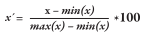
where x is raw data value; max/min denote the bounds for best and worst performance, respectively; and x’ is the normalized value after rescaling. Each indicator distribution was censored, so that all values exceeding the upper bound scored 100, and values below the lower bound scored 0. The rescaling equation ensured that higher values indicated better performance. In this way, the rescaled data became easy to interpret: a country with a score of 75 has covered three quarters of the distance from worst to best.
1.3.4. Weighting and aggregation
To compute the SDG Index, we first calculate scores for each goal using the arithmetic mean of the scores of the indicators for that goal. These goal scores are then averaged across all 17 SDGs to obtain the SDG Index score. Equal weights are used for aggregating indicator scores into the goal scores, and for aggregating goal scores into the overall index score.
Averaging across all indicators for an SDG might hide areas of policy concern if a country performs well on most indicators but faces serious shortfalls on one or two metrics within the same SDG (often called the ‘substitutability’ or ‘compensation’ issue). As a result, the SDG Dashboards are based only on the two variables on which a country performs worst – except for Goal 3, where the three worst indicators are used. The dashboards use a ‘traffic light’ colour scheme (green, yellow, orange and red) to illustrate how far a country is from achieving a particular goal. A red rating is applied only if both the worst-performing indicators score red. Similarly, in order to score green, all indicators under the goal must be green.
1.3.5. Trends
Using panel data, we estimate how fast a country has been progressing towards an SDG and determine whether – if continued into the future – this pace will suffice to achieve the SDG by 2030. To estimate SDG trends, we calculated the linear annual growth rates needed to achieve the goal (green threshold) by 2030 (2015–2030), which we compare to the average annual growth rate over the most recent period, starting from the year of the adoption of the SDGs (2015–2024). A green arrow denotes ‘on track or maintaining performance above goal achievement’, the intermediate yellow and orange arrows denote insufficient progress, and a red arrow indicates movement away from the target. Countries that have already achieved an SDG target but whose performance has worsened since 2015 are assigned an orange arrow, ‘stagnation’.
1.3.6. Country groupings and averages
To simplify the analysis, we provide population-weigthed averages using the country groupings described in the table below. The online database provides detailed results by individual country, as well as country groupings for all indicators and goals.
1.3.7. Country profiles and data visualization
The Europe Sustainable Development Report 2926 is accompanied by an online data visualization tool, which can be accessed at sdgtransformationcenter.org. Dedicated country profiles, the full excel database and indicator metadata are all available online.
Table 1.3 | Country groupings used in the ESDR25

Source: Authors
1.4. References
Benczur P, Boskovic A, Giovannini E, Pagano A, and Sandor AM. (2025). Measuring Sustainable and Inclusive Wellbeing: A Multidimensional Dashboard Approach. Publications Office of the European Union, Luxembourg. https://doi.org/10.2760/4186342.
Borchardt S, Barbero Vignola G, Buscaglia D, Maroni M, and Marelli L. (2023). Mapping EU Policies with the 2030 Agenda and SDGs: Fostering Policy Coherence through Text-Based SDG Mapping. No. JRC130904. Publications Office of the European Union. https://doi.org/10.2760/110687.
Cook L and the Associated Press. (2025). France bemoans ‘dark day’ as Trump wins EU trade deal at his golf course in Scotland. Fortune, July 29. https://fortune.com/2025/07/29/trump-eu-trade-deal-scotland-golf-course-france-dark-day/
Council of the European Union. (2024). Strategic Agenda 2024–2029. https://www.consilium.europa.eu/en/european-council/strategic-agenda-2024-2029/
Draghi, M. (2024). The Future of European Competitiveness: A Competitiveness Strategy for Europe. European Commission. https://commission.europa.eu/document/download/97e481fd-2dc3-412d-be4c-f152a8232961_en
EESC. (2023). EESC Contribution to the EU-level Voluntary Review of the implementation of the 2030 Agenda. European Economic and Social Committee. https://www.eesc.europa.eu/en/news-media/news/eesc-contribution-eu-level-voluntary-review-implementation-2030-agenda
EESC. (2025a). Addressing the interdependence between peace and climate change: need for renewed global diplomacy. European Economic and Social Committee. REX/599-EESC-2025. https://eur-lex.europa.eu/eli/C/2025/5150/oj
EESC. (2025b). Phasing out fossil fuel subsidies while ensuring European competitiveness, mitigating the cost-of-living crisis, and promoting a just transition. https://www.eesc.europa.eu/en/our-work/opinions-information-reports/opinions/phasing-out-fossil-fuel-subsidies-while-ensuring-european-competitiveness-mitigating-cost-living-crisis-and-promoting
EESC. (2025c). Opinion: Healthy planet for healthy people – towards a comprehensive ‘One Health’ approach. European Economic and Social Committee. NAT/947-EESC-2025. https://eur-lex.europa.eu/ eli/C/2026/16/oj
Eligon J. (2025). Trump officials are policing words and foiling deals at G20 summit. New York Times, November 15. https://www.nytimes.com/2025/11/15/world/africa/trump-g20-boycott.html?unlocked_article_code=1.1U8.SIYS.L5hY3heQcX_h&smid=nytcore-ios-share&referringSource=articleShare
EPRS. (2021). Ten Composite Indices for Policy-Making. (2021). Ten Composite Indices for Policy-Making. European Parliamentary Research Service. https://www.europarl.europa.eu/thinktank/en/document/EPRS_IDA(2021)696203 .
Eriksson M, Richardson K, Wallbaum H, et al. (202 5). The Nordic Sustainable Development Report 2025. Sustainable Development Solutions Network (SDSN) Northern Europe, ISBN 978-91-989640-4-2. https://sdgtransformationcenter.org/reports/nordic-sustainable-development-report-2025.
European Central Bank. (2025). Opinion of the European central bank on proposals for amendments to corporate sustainability reporting and due diligence requirements. Official Journal of the European Union, 8 May.
European Parliament. (2025). Implementation and delivery of the Sustainable Development Goals in view of the 2025 High-Level Political Forum. Procedure File: 2025/2014(INI). https://oeil.europarl.europa.eu/oeil/cs/procedure-file?reference=2025/2014(INI)
Flusberg SJ, Holmes KJ, Thibodeau PH, Nabi RL and Matlock T. (2024). The psychology of framing: how everyday language shapes the way we think, feel, and act. Psychological Science in the Public Interest 25 (3): 105–61. https://doi.org/10.1177/15291006241246966
Gelles D. (2026). At Davos, talk of climate change retreats to the sidelines. New York Times, Jan 22.
Gros M and Griera M. (2025). EU conservatives vote with far right to approve cuts to green rules. Politico. https://www.politico.eu/article/epp-votes-with-far-right-to-approve-cuts-to-green-rules
Helliwell JF, Layard R, Sachs J, De Neve JE, Aknin LB, and Wang S (Eds). (2025). World Happiness Report 2025. University of Oxford. Wellbeing Research Centre.
Hulst M van, Metze T, Dewulf A, de Vries J, van Bommel S, and van Ostaijen M. (2025). Discourse, framing and narrative: three ways of doing critical, interpretive policy analysis. Critical Policy Studies 19 (1): 74–96. https://doi.org/10.1080/19460171.2024.2326936
IPCC. (2022). Climate Change and Land: IPCC Special Report on Climate Change, Desertification, Land Degradation, Sustainable Land Management, Food Security, and Greenhouse Gas Fluxes in Terrestrial Ecosystems. Intergovernmental Panel on Climate Change, Cambridge University Press. https://doi.org/10.1017/9781009157988
Ishii N, Lafortune G, Esty DC et al. (2024). Global Commons Stewardship Index 2024. SDSN, Yale Center for Environmental Law & Policy, and the Center for Global Commons at the University of Tokyo. Paris; New Haven, CT; and Tokyo.
Kangas OE, Niemelä M and Varjonen S. (2014). When and why do ideas matter? The influence of framing on opinion formation and policy change. European Political Science Review 6 (1): 73–92. https://doi.org/10.1017/S1755773912000306
Lafortune G and Sachs JD. (2024). The Index of Countries’ Support for UN-based Multilateralism: construction, verification and correlates. Asian Economic Papers 23 (3): 1–28. https://doi.org/10.1162/asep_a_00902
Lafortune G and Sachs JD. (2025). The U.S. is against the world on sustainable development. Nature 640 (8058): 318. https://doi.org/10.1038/d41586-025-01041-y
Lafortune G, Cortés Puch M, Mosnier A, et al. (2021). Europe Sustainable Development Report 2021: Transforming the European Union to achieve the Sustainable Development Goals. SDSN, SDSN Europe and IEEP.
Lafortune G, Fuller G, Moreno J, SchmidtTraub G and Kroll C. (2018). SDG Index and Dashboards. Detailed Methodological paper. Bertelsmann Stiftung and Sustainable Development Solutions Network. https://github.com/sdsna/2018GlobalIndex/raw/master/2018GlobalIndexMethodology.pdf
Lafortune G, Fuller G, SchmidtTraub G and Kroll C. (2020). How is progress towards the Sustainable Development Goals measured: comparing four approaches for the EU. Sustainability 12 (18): 18. https://doi.org/10.3390/su12187675.
Letta E. (2024). Much More Than a Market: Speed, Security, Solidarity, Empowering the Single Market to Deliver a Sustainable Future and Prosperity for All EU Citizens. European Commission. https://www.consilium.europa.eu/media/ny3j24sm/much-more-than-a-market-report-by-enrico-letta.pdf
Malik A, Lafortune G, Carter S, Li M, Lenzen M, and Kroll C. (2021). International spillover effects in the EU’s textile supply chains: a global SDG assessment. Journal of Environmental Management 295: 113037. https://doi.org/10.1016/j.jenvman.2021.113037
Malik A, Lafortune G, Dahir S et al. (2023). Global environmental and social spillover effects of EU’s food trade. Global Sustainability 6 ( January). https://doi.org/10.1017/sus.2023.4.
Malik A, Lafortune G, Mora CJ, Carter S, and Lenzen M. (2024). Carbon and social impacts in the EU’s consumption of fossil and mineral raw materials. Journal of Environmental Management 369: 122291. https://doi.org/10.1016/j.jenvman.2024.122291.
Markard J, Rinscheid A and Widdel L. (2021). Analyzing transitions through the lens of discourse networks: Coal phaseout in Germany. Environmental Innovation and Societal Transitions 40: 315–31. https://doi.org/10.1016/j.eist.2021.08.001.
Matthews A. (2024). Farmer protests and the 2024 European Parliament elections. Intereconomics, Volume 59, 2024:2 pp. 83–87, JEL: F13, Q18,Q58. https://www.intereconomics.eu/contents/year/2024/number/2/article/farmer-protests-and-the-2024-european-parliament-elections.html
Mecklin J. (2026). 2026 Doomsday Clock statement. Bulletin of the Atomic Scientists. https://thebulletinorg/doomsdayclock/2026-statement/.
Papadimitriou E, Neves A and Becker W. (2019). JRC Statistical Audit of the Sustainable Development Goals Index and Dashboards. European Commission, Joint Research Centre. doi:10.2760/723763, JRC116857.
Politico. (2025). EU-US trade deal: The biggest losers and (a few) winners. Politico, July 29. https://www.politico.eu/article/winners-losers-eu-von-der-leyen-us-donald-trump-trade-deal-tariffs/
Ruehl M, Foy H and Politi J. (2025). Davos assured Trump ‘woke’ topics were off the agenda. Financial Times.
Sachs JD, Lafortune G, and Fuller G. (2024). Sustainable Development Report 2024: The SDGs and the UN Summit of the Future. Dublin University Press; UN Sustainable Development Solutions Network (SDSN).
Sachs JD., Lafortune G, Fuller G and Iablonovski G. (2025). Financing sustainable development to 2030 and mid-century. Sustainable Development Report 2025. SDSN and Dublin University Press.
Sadeleer N de. (2025). The European Green Deal: greenwashing compounded by deregulation(Omnibus Law) or a genuine paradigm shift? European Journal of Risk Regulation, June 9, 1–32. https://doi.org/10.1017/err.2025.20.
SchmidtTraub G, Kroll C, Teksoz K, Delacre DD and Sachs JD. (2017). National baselines for the Sustainable Development Goals assessed in the SDG Index and Dashboards. Nature Geoscience 10(8): 547–55. https://doi.org/10.1038/ngeo2985.
Taylor P. (2025). The EU has capitulated to Trump. But even this doesn’t buy an end to the transatlantic trade war. The Guardian.
Tocci N. (2025). Once a global leader on climate action, the EU has given in to the right’s greenbashing. The Guardian.
Trachtman J, Remy JY, Esty D and Sutton T (2024). Villars Framework for a Sustainable Global Trade System, Version 2.0. Remaking Trade Project, Jan 2024. https://remakingtradeproject.org/villars-framework
UNDP and MBRF. (2025). The Global Knowledge Index. United Nations Development Programme and Mohammed bin Rashid Al Maktoum Knowledge Foundation.
Van Nguyen. (2026). Vietnam to be among top 50 countries in UN Sustainable Development Goals (SDGs) Index in 2026. VnEconomy. https://en.vneconomy.vn/vietnam-to-be-among-top-50-countries-in-un-sustainable-development-goals-sdgs-index-in-2026.htm
WEF. (2026). Davos 2026: Special Address by Mark Carney, PM of Canada. World Economic Forum, January 20, 2026. https://www.weforum.org/stories/2026/01/davos-2026-special-address-by- mark-carney-prime-minister-of-canada/.
The Europe Sustainable Development Report 2026 is the seventh edition of our independent quantitative report on the progress of the European Union and its member states towards Sustainable Development Goals (SDGs). The report was prepared by teams of independent experts at the Sustainable Development Solutions Network (SDSN).
Citation
Lafortune, Guillaume and Grayson Fuller (Eds) (2026). Europe Sustainable Development Report 2026: SDG Pathways to 2030 and Mid-Century. Paris: SDSN and Dublin: Dublin University Press. DOI: https://doi.org/10.82163/224

